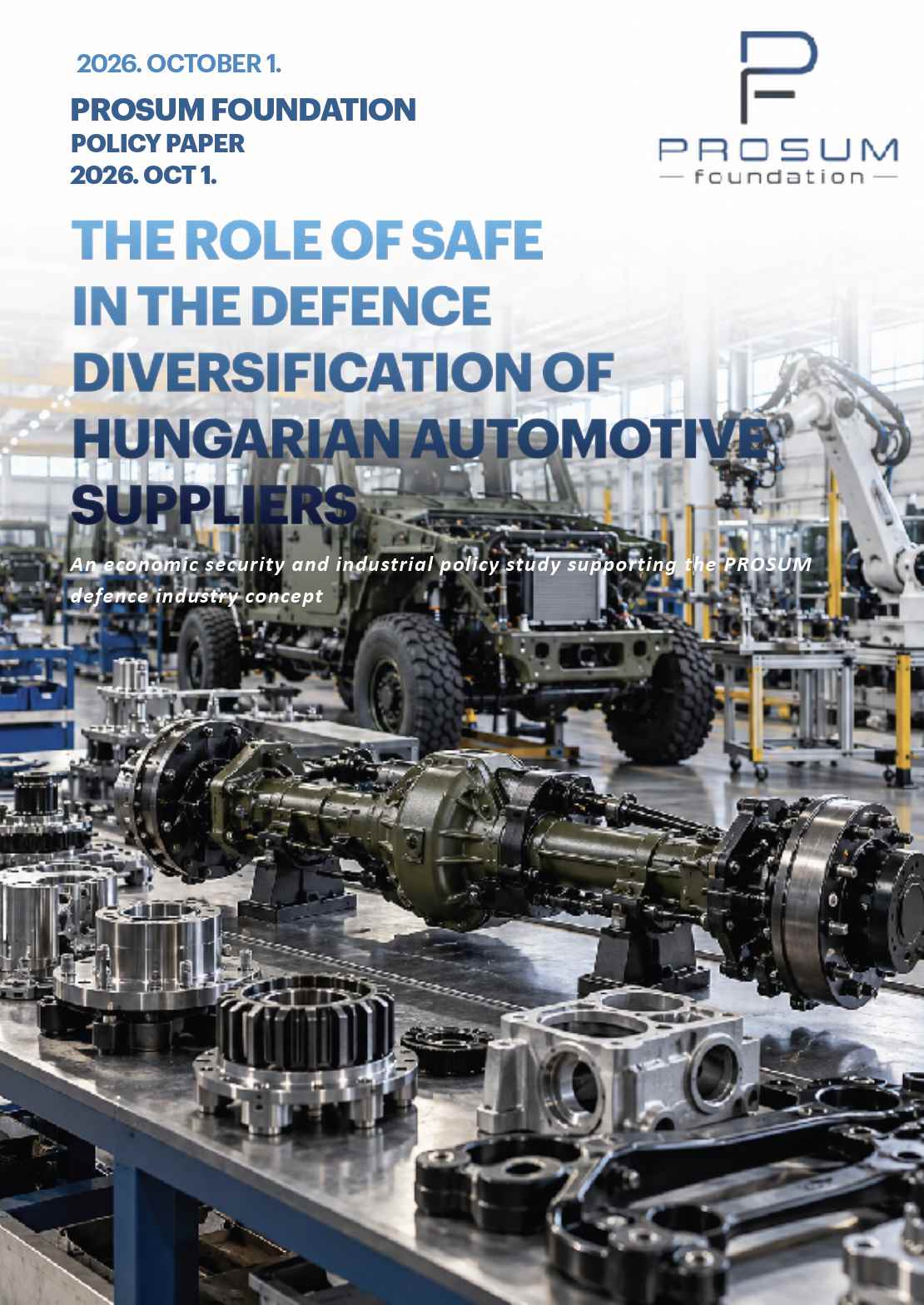
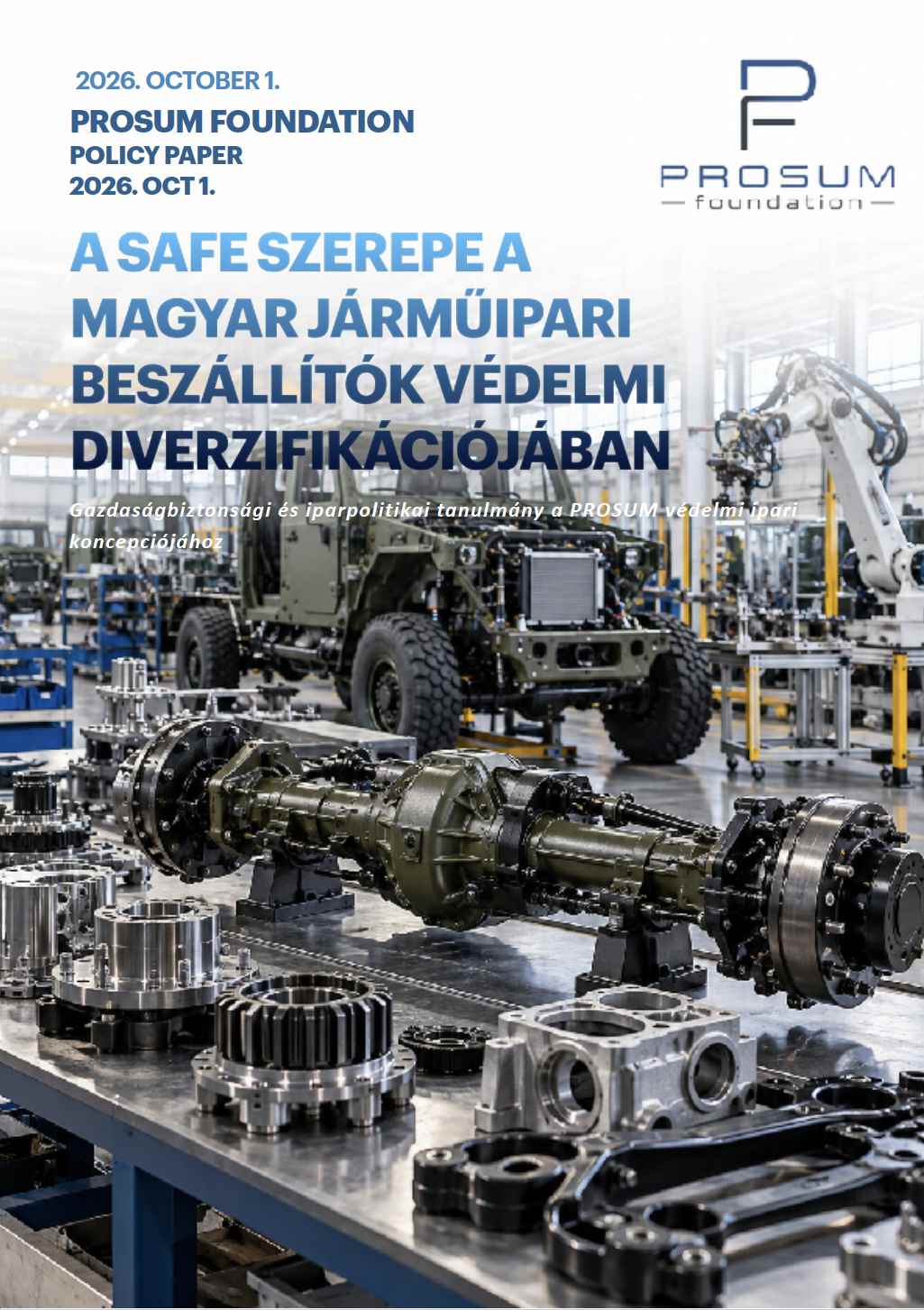
The Role of SAFE in the Defence Diversification of Hungarian Automotive Suppliers
This policy paper examines how Hungary’s automotive suppliers could apply their manufacturing and engineering expertise to defence and dual-use markets, supported by eligible procurement under the EU’s SAFE loan instrument. Building on PROSUM’s defence industry concept, it explores opportunities in military mobility, life-cycle support, digital logistics and specialised technologies, alongside the legal, financial and technological conditions for market entry.
For policymakers, the paper provides a framework for connecting defence procurement with supplier development and economic security. It distinguishes financing opportunities from measurable industrial benefits and proposes a phased approach to implementation, risk management and evaluation. Its central question is how public procurement can create lasting domestic capabilities, competitive businesses and access to European supply chains while maintaining fiscal discipline.
It is available in both English and Hungarian.
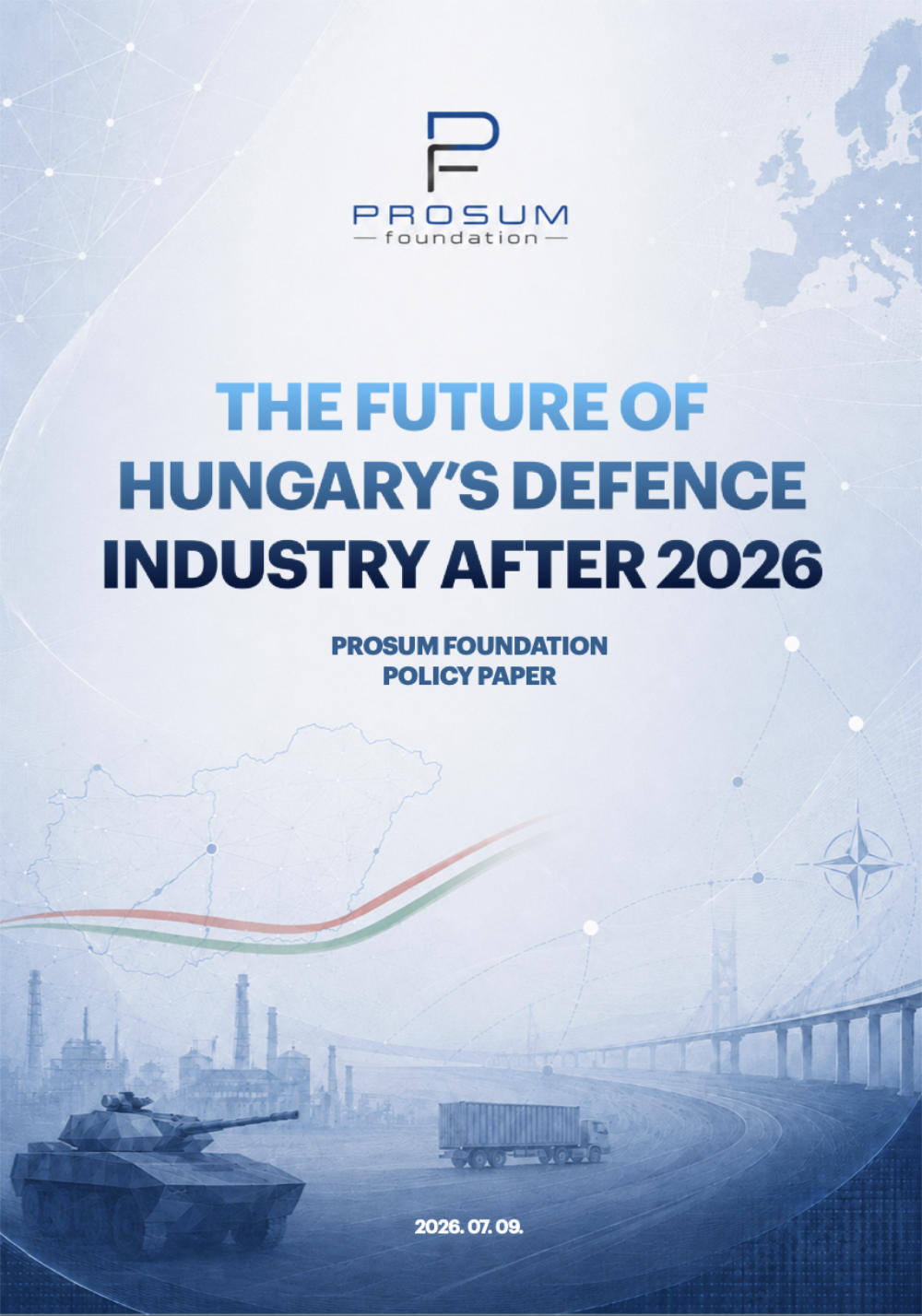
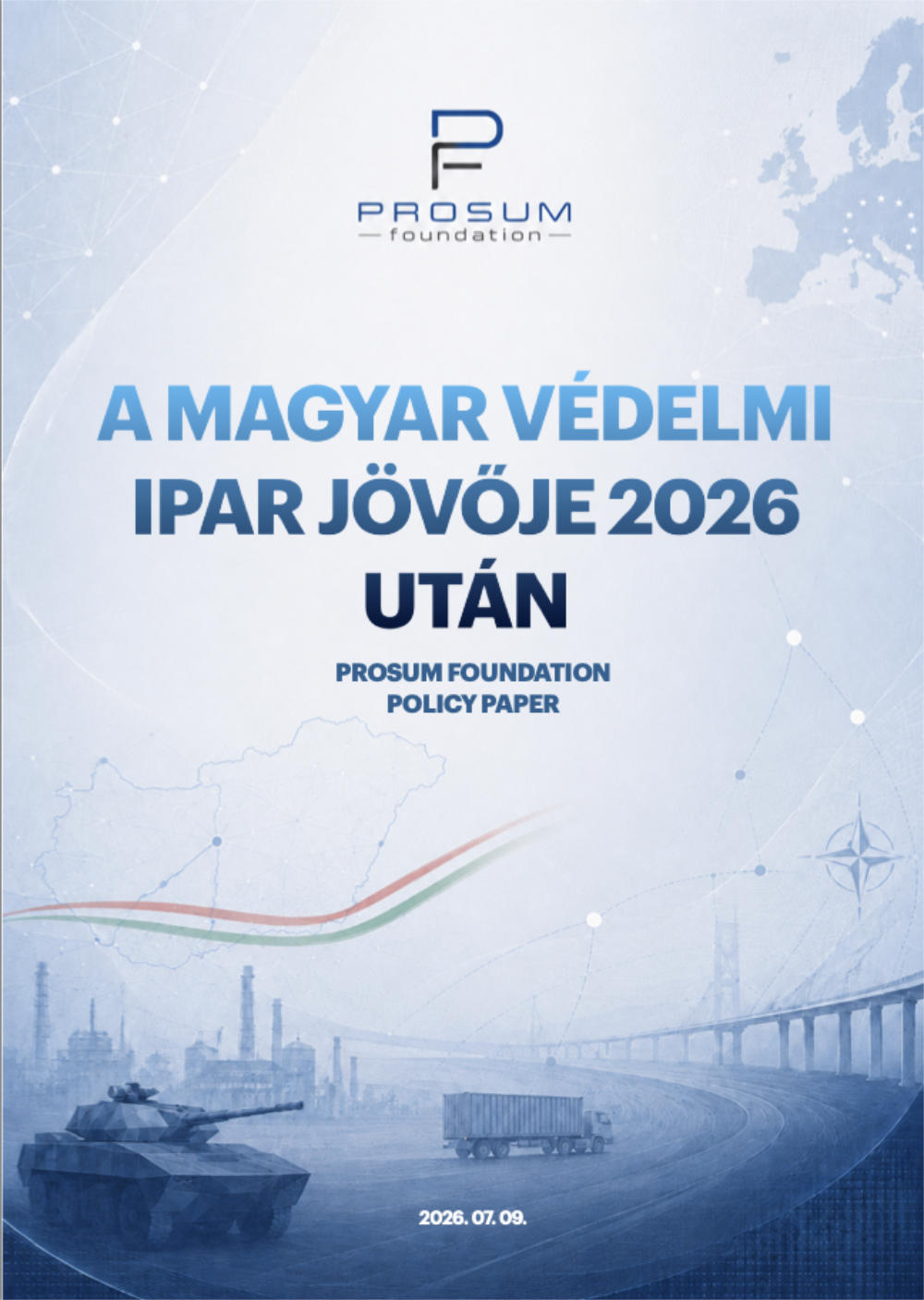
The Future of Hungary’s Defence Industry after 2026
This Prosum Foundation policy paper examines one of the most important strategic questions facing Hungary after 2026: how a future government should manage the defence industrial capacities built up during the previous governmental cycle.
The study argues that Hungary’s interest does not lie in dismantling existing defence industrial assets, but in depoliticising them, increasing transparency, and placing critical capabilities under a clear framework of strategic state control. It assesses the ownership, institutional and national security challenges surrounding Hungary’s emerging defence industrial ecosystem, including armoured vehicles, ammunition production, military mobility, lifecycle support, digital defence technologies, cybersecurity and dual-use capabilities.
The paper proposes a differentiated approach to state and private ownership, based not on ideology but on military function, security of supply, critical infrastructure protection and alliance obligations. It also examines how Hungary’s defence industry can be integrated more effectively into the structure and readiness requirements of the Hungarian Defence Forces, NATO capability planning, and the European Union’s new defence industrial initiatives.
Rather than treating defence industry as a purely economic sector, the study frames it as a national capability-development challenge. Its central recommendation is strategic consolidation: preserving what has real military and industrial value, reforming politically over-concentrated structures, strengthening democratic and national security oversight, and turning inherited economic-military assets into accountable national capabilities.
The policy paper is intended for policymakers, defence professionals, analysts and stakeholders interested in Hungary’s post-2026 defence policy, NATO integration, European defence industrial cooperation and the future of strategic state capacity.
It is available in both English and Hungarian.